By Leon Hugo, University of Pretoria & Jean Hugo, Tshwane University of Technology
The pressing environmental crisis is well-documented and widely recognized (Hugo, M.L. & Hugo, J.O., 2024). A significant global concern is food security, particularly in the context of a rapidly increasing world population.
The advent of geoengineering in agriculture has led to a dramatic rise in food production, with terms like the “Green Revolution” becoming part of common discourse. However, it is less widely known that these geoengineering techniques are neither environmentally friendly nor sustainable as long-term solutions for food production.
The ecological drawbacks are significant, including the excessive use of fertilizers, herbicides, and pesticides, which have severely impacted biodiversity and soil health. Soil structure has also been compromised due to the use of heavy machinery. Additionally, the employment of migrant workers on commercial farms has weakened social bonds and family ties.
Despite these challenges, the global demand for food remains, necessitating the exploration of alternative methods. As a result, there is increasing global interest in small-scale, eco-friendly agricultural practices that can supplement and reduce dependence on large-scale monoculture production.
In South Africa, poverty in rural areas and the struggle to make ends meet have driven significant urbanization in the past. Currently, 67% of the population resides in urban areas, and despite efforts to promote sustainable farming practices, this figure is projected to rise to 80% by 2030. This urbanization trend is undermining social structures, and food security remains a persistent challenge.
The South African government’s policy of land redistribution is a key element of its broader land reform agenda, aimed at addressing historical land dispossession under colonialism and alleviating poverty in rural areas.
The policy seeks to rapidly increase the capacity of rural landowners to produce sufficient food for themselves and to expand production on a commercial scale to benefit the wider community.
However, the economic impact of land redistribution has been limited thus far. While there are instances of success where redistributed land has been used productively, many farms have struggled due to a lack of support and resources, sometimes leading to a decrease in agricultural productivity in certain regions. Traditional farmers lack the capacity and resources to compete with large-scale commercial food production.
The newly appointed Minister of Agriculture, John Steenhuisen, has emphasized the implementation of sustainable agricultural practices as a priority. He has pledged to support small farmers, advocating for inclusive growth and assisting smallholder farmers in accessing foreign markets.
Steenhuisen envisions small farmers coexisting with, and contributing to, the larger agricultural sector. He has highlighted the importance of new technologies, products, and practices, and acknowledges the critical role of finance in unlocking the full potential of emerging farmers. He views the agricultural sector as an “engine room” for job creation, economic growth, and the development of the rural economy.
Despite the logical basis for this initiative, it will require significant time to educate, equip, and effectively engage a sufficient number of farmers to make a substantial contribution to the country’s agricultural output.
Given that small-scale farming is not yet, and will not soon be capable of meeting these demands, it is imperative to diversify income sources more broadly. Alternative revenue streams are essential to bridge the gap as the sector moves toward achieving full viability and sustainability.
Tourism is considered one of the largest industries globally, rivalling major sectors such as oil, arms, and human trafficking. In 2018, international arrivals reached 1.32 billion, with projections estimating this number will increase to 1.8 billion by 2030. The industry contributes $8.8 trillion to the global economy and supports 319 million jobs.
However, traditional “mass tourism” is primarily driven by financial gain, often at the expense of the livelihoods of indigenous populations and the ecological integrity. Notably, global tourism accounts for approximately 8% of global greenhouse gas emissions, leading to the exploitation and degradation of both cultural and ecological resources.
Tourism is also a crucial sector within the South African economy. In 2020, one in five new jobs created was in tourism. The total contribution of travel and tourism to South Africa’s gross domestic product (GDP) was projected to be R424 billion in 2018 (9.3% of GDP) and was expected to grow by 2.5% in subsequent years.
Tourism thus represents a significant industry with substantial potential in South Africa, often referred to by its slogan, “a world in one country.”
However, the tourism industry can be likened to monocultural agriculture in that it is a large-scale, capital-intensive enterprise that generates significant income for entrepreneurs, often at the cost of environmental and socio-cultural landscapes.
A particularly troubling trend in this context is the rise of popularity of visiting sites and communities that are at risk of disappearing due to environmental degradation. This trend reflects a fear that future generations may not have the opportunity to experience locations such as the Great Barrier Reef in Australia, the snow on Mount Kilimanjaro, wilderness areas, or closer to home, the San people of the Kalahari, the environment surrounding Nelson Mandela’s birthplace, and traditional Zulu kraals and customs, the Rain Queen of the BaVenda, the Reed dance in eSwatini.
All these sensitive environments are receiving increasing numbers of visitors to the detriment of the environment and the people. There is a need to spread the impact to include fewer sensitive areas.
As previously mentioned, the small-scale farming industry must explore alternative and supplementary income-generating activities while establishing a productive regenerative farming sector.
One often underappreciated avenue is agritourism, which encompasses any agricultural activity that attracts visitors to a farm. Being part of the everyday chores of the farm is in itself a strong attraction for urban people, especially children.
Agritourism activities can include direct sales (e.g., farm stalls, fruit picking), rural education (e.g., temporary farm work, school visits, feeding animals, observing traditional ploughing with oxen, participating in household chores like gathering wood, finding chicken eggs and fetching water from a nearby stream), farm stays (hospitality), and recreation (e.g., hunting, hiking, horseback riding). (Part 2 of this series will outline the basic requirements for developing an ecotourism enterprise.)
Agritourism has become a vital means of survival for many small farms pressed for cashflow. By diversifying business operations, farm operators can ensure a more stable income with minimal capital investment and expertise required to establish a small-scale agritourism enterprise. (Part 3 of this series will demonstrate how to develop a money-spinning successful hiking trail.)
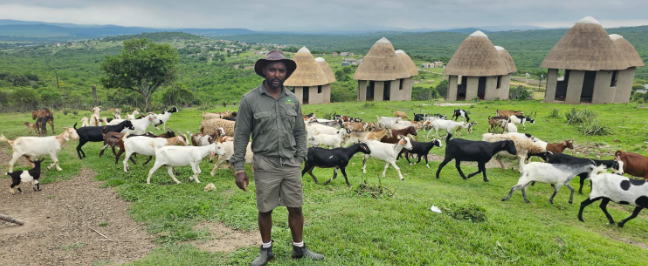
This is because agritourism activities can occur during times of the year that crops may not be in season, and by providing a separate stream of income. Agritourism operations helps their surrounding communities by drawing tourists to the area that stimulates the local economy and job creation.
A single farmer on a small site can embark on this by proving accommodation, or a number of households, or a large community can provide various recreational and educational experiences to visitors.
Cultural heritage, scenic views, socializing, education, are some of the resources for agritourism. (Mehloding Community Trust – mehloding@telkomsa.net)
An example of such a successful local-based ecotourism enterprise is the Mehloding Trail, located in Matatiele in the southern Drakensberg. It is a four nights and five days hiking trail. It is a rural economic development by way of community-based tourism, introducing people to the farming community.
The hiking trail traverses mountain terrain with spectacular views, passes through villages providing accommodation in traditional Xhosa households, visiting ancient rock-art, crossing mountain streams, indigenous forests with interesting indigenous medicinal plant, and craft projects.
The initiative has been so successful that they run an annual festival, the Matatiele Heritage Event. The event covers mountain biking, traditional music and entertainment, horse racing, best dressed jockey and horse competition, traditional food, fashion and traditional attire from women of all different cultures, etc. Main objectives of the event are showcasing the rich diversified culture in Matatiele.

However, “not all that glitters is gold”. Ecotourism must avoid falling into the same pitfall as mass tourism, which is often driven by short-term financial gain. To develop a truly sustainable industry, it is essential to engage in careful planning that adheres to fundamental ecotourism principles.
Operating a profitable farm presents numerous challenges, including climate uncertainty, market price instability, threats from pests and diseases, which can pose significant short-term obstacles for farmers.
Agritourism offers a viable solution to mitigate these risks by providing a steady source of income during difficult periods. This form of tourism requires minimal capital investment and entails low risk while promoting sustainability of food security.
Over time, agritourism enterprises have the potential to generate profits that surpass those of traditional small-scale farming, demonstrating that farm-based tourism can be highly beneficial.
Agritourism is indeed an easy, profitable addition to farming.