By Selwyn Roup, GST Contributor
Location, location, location… and never before has Southern Africa stood astride the Indo-Atlantic straits of East to West and North to South as in the past nine months. The good news is that in 2025 South Africa welcomed 10.5 million tourists, topping pre-Covid numbers.
The ebb and flow of power politics and the moods of rating agencies set against the admirable dedication to tourism makes travel choices difficult and consequential.
From the Quindao to Chicago, and Greenland to Green Point the rumors and drums of war, trade tariffs, foreign exchange fluctuations, and new world order alliances are coupled with threats against diverse nationalities and individuals, whether by decree or extortion: personal safety is becoming high risk.
Freedom of movement is even more constrained. The web of geo-political tourism is tightening, often deciding who may or may not enter the great tourism capitals and countries of the world.
Sounds great for South African tourism?
We have seen the lady bathing in the Gauteng pothole, even canoeing on a cesspool river resort. We have read the World Bank Business Index that has ranked South Africa at number 84 out of 190 countries. We’re just below the likes of Mongolia, Albania and Kuwait but happily above Zambia, Panama, Botswana and Malta. Our barriers to business include external trade with added tariff difficulties; starting a business with the baggage of B-BBEE almost makes it a non-starter and with land expropriation without compensation still on the books.
An economically weary South Africa with optimism at an all-time low may become the bug bear of Adam Smith’s “The Wealth of Nations” – an iconic piece of economic literature celebrating its 250th year in publication.
In 1776 Smith wrote “The Cape of Good Hope is peculiarly fortunate in its situation.” In 2026 it remains so, and could rightfully become the South to North gateway to Africa.
At this juncture we may contemplate converting C J Rhodes’s epic vision of the Cape to Cairo railway into the Cape to Cape Malabata (near Tangiers) Railway in Morocco.
With a serious construction starting date of 2035, the Straits of Gibraltar Undersea Tunnel will link Africa and Europe with a travel time of 30 minutes and Presto!, Africa enters the EU Market quickly, easily and safely.
Think Gigawatts of solar and wind energy from North African coasts and deserts, and oil, gas, agricultural phosphates, nitrates and potentially hydrogen.
Then there is the African Union (AU) vision of inclusionary cross borders trade and tourism: the East – West central African belt and road of the US and EU holding promise.
The geo-political landscape has changed fundamentally. The renaming of the US-Iran war to Operation Economic Fury makes a strong case: the goal is economic dominance.
The on-off India Middle East Consortium (IMEC), a trans-continent economic lifeline, is proposed as a corridor of pipelines from the Middle East, at center, to the most populous, fastest growing economy, India in the East. Readily transshipped from there to the fuel hungry and dependent Tigers in the East.
The oil and gas powerhouses of the Middle East would pass raw products into Gaza for refining and value-adding to exit finished products as diesel, petroleum, jet fuels, LNG and Hydrogen at Haifa (an Israeli logistics hub) and pipeline pumping stations entering the Mediterranean Sea. From there submarine pipelines would go to Cyprus and Alexandria terminals and then up into Eastern Europe.
No shipping (delays), no stopping, grand economies of scale, independent and cheaper energy delivery, efficiency and security.
Tourism is Past, Present and Future – Present and Future is not a Guarantee
South Africa’s choke point is clearly not political but economical. And our economy is a tool manipulated by the major players.
Let’s check in at where we are at…
De-industrialization woes, and without oil and gas
How did the country become so hopelessly exposed to the whims of foreign wars and international oil traders? It’s a deep, structural and largely self-inflicted wound: the radical de-industrialization of its downstream refining capabilities.
Historically, Mzansi had a refining capacity of more than 700,000 barrels per day (bpd) spread over six refineries. Today, its capacity is about 35% of that and it procures 70% of its fuel consumption as finished petroleum products.
“Minister G Mantashe framed the urgency of local development against the backdrop of heightened geopolitical tensions and the US-Israeli war on Iran, which have severely disrupted fuel supply chains, driven the cost of air travel to new highs and created massive volatility in global oil markets. Crucially, he was wagging his finger at his detractors by claiming legislative urgency is necessary to ensure that local oil and gas developments ‘…do not remain indefinitely suspended in lengthy litigation processes that create investor uncertainty’.” (Excerpts from Daily Maverick: 22 March 2026)
Yet, Tyler Cowan, a well-respected American economist, states that Cape Town is a better place to live than Dubai. So said, believe it or not, before the Iranian missiles struck home.
We have every right to complain (ever so softly from corporate, civil, faith based groups) and ask why does a foreigner see what we can’t: South Africa with its famous fauna-flora-diversity in size, the number of multicultural influences, and a reasonably safe spatial economics.
We are one of the very few developing countries to have well signposted “Beware! Entering Hi-Jack Zone” along a large number of streets.
What headlines do we need to make to the northern hemisphere tourists who choose South Africa and the Western Cape in particular as their destination of choice?
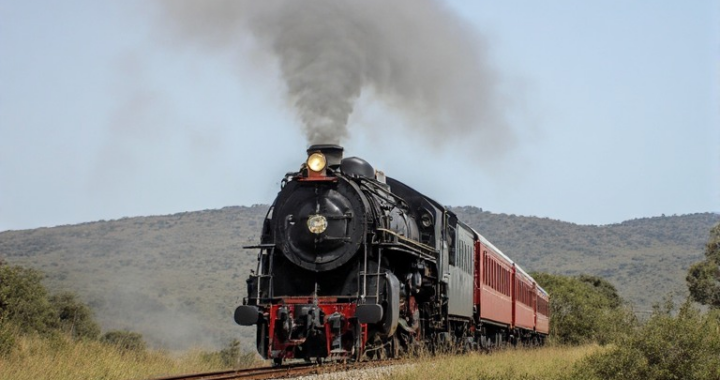
- Return of the iconic Shosholoza Meyl train service to main routes
- The George to Mossel Bay Steam train has been inaugurated after a 60 year hiatus
- Mag-Lev High Speed rail JNB to CTN?
- Airships (helium lift) City to City / Kruger Park / CTN – Robben Island / Drakensburg vertical take-off and land?
- Inter Cape / Hylton Ross / Bus Cuisine / Ultra comfort tours
- Retrace the steps of the Voortrekkers, the Diamond Rush wagon and horse adventures: the Blue Train Gold Rush.
- Follow Portuguese Explorers on a Tall Sailing Ship. Adventure from Walvis Bay to Port Natal
Let’s expose visionary projects as part of high-end tourism and investment opportunities:
- The Berg River Development Corridor: 264kms of tourism, viticulture, agriculture, fauna and flora.
- Education and Long Stay Hospitality (in Australia 1 million foreign students contribute 53.66 billion AU Dollars)
- Saldanha Bay, the largest deep water port: established Freeport and Special Economic Zone (mostly unoccupied) but ready to roll in industry and replace Cape Town as the New Container Terminal, freeing up a major section of Cape Town’s CBD Waterfront for development.
- Street Festivals and Local is Lekker Events.